

Ten lessons from 2025
Another year done. Rather than the usual resolutions list, here are ten small realisations that actually changed how I approached things in 2025.

tldr;
The underrated power of less
Gratitude hits different when you slow down
You have free will to do things
Keep an open mind (even about kiwi fruit)
Focus on the big things
Connection is the thing you think you’ll get around to
The quiet power of positive peer pressure
Letting go of who you were is how you move forward
Velocity over speed
Checklists aren’t boring, they’re liberating
The underrated power of less
We’re drowning in aspirational routines. The perfect morning ritual, the curated wardrobe, the optimised productivity system with seventeen different apps. It all takes up so much brain space, and most of it doesn’t actually move the needle.
This year, I leaned into reduction instead; fewer commitments, less stuff, simpler systems. I unsubscribed from newsletters I never read, deleted apps I opened out of habit, said no to obligations that felt like “should” rather than “want to.”
Every time I let something go, I got back time, energy, and clarity. The paradox is real: sometimes the best productivity hack is just doing fewer things. We’re so obsessed with addition, adding habits, adding systems, adding goals, that we forget subtraction is an option. Reduction isn’t about deprivation. It’s about creating space to think, to rest, to actually enjoy the things you’ve kept.
Gratitude hits different when you slow down
My friend Celine and I discussed this last year, and it stuck with me. We achieve things we’ve worked towards for months or years, feel good for about five minutes, then immediately pivot to the next goal. There’s this constant forward momentum that means we never actually savour anything. We’re perpetually dissatisfied, always reaching, never arriving.
I came across a reel this year that reframed this beautifully:
“What a privilege to be tired from the work you once begged the universe for. What a privilege to feel overwhelmed from growth you used to dream about. What a privilege to outgrow things you used to settle for.”
That perspective shift, from entitlement to gratitude, changed a lot for me. Most of us are so focused on the gap between where we are and where we want to be that we forget to look at the gap between where we were and where we are now. That gap is worth acknowledging.
Celine also wrote a wonderful broader essay on the topic here.
You have free will to do things
When I was younger, I had this default mode of “just start.” Interested in martial arts? Sign up for a class. Want to try photography? Buy a cheap camera and go. Somewhere along the way, I lost that. Everything became complicated: researching the perfect approach, waiting for the right time, overthinking the commitment. And of course, that right time never came.
This year reminded me that you can just... do things. You don’t need permission. You don’t need the perfect moment. Want to travel somewhere? Book a flight. Interested in a new skill? Sign up for a beginner class.
This extends beyond hobbies, too, changing careers, exploring new cities, and trying different types of work. The permission you’re waiting for doesn’t exist. You already have it. The worst-case scenario of trying something is usually that you don’t enjoy it and you stop. The worst-case scenario of not trying is wondering “what if” for years.
Keep an open mind (even about kiwi fruit)
I used to write things off based on singular bad experiences. Didn’t like chai after one dodgy cup as a kid. Hated kiwi fruit because of the texture as a kid. We do this all the time, one failed attempt, and we conclude we’re “just not good at that.”
This year, I revisited a bunch of things with fresh eyes. Turns out, I actually enjoy chai now. Kiwi fruit is amazing. The point isn’t really about kiwi fruit. It’s recognising that one experience doesn’t define a thing, and more importantly, that we change.
Your tastes evolve. The person you were at twenty might have genuinely disliked something that the person you are at thirty would love. Keeping an open mind doesn’t mean you have to like everything. It just means acknowledging that “I didn’t like this once” doesn’t have to mean “I will never like this.”
Focus on the big things
Randy Pausch talks about this in The Last Lecture, and Mark Manson hammers it home in The Subtle Art of Not Giving a F*ck: most of what we stress about doesn’t matter.
Someone was rude in the queue, a meeting ran over, the WiFi is slow, these things are annoying in the moment but completely irrelevant in the bigger picture. Meanwhile, the actual big picture stuff, relationships, health, meaningful work, how you treat people, that’s what shapes your life.
This year, I tried to stop letting minutiae occupy my time and energy. Did I succeed every time? Absolutely not. But when I did manage to zoom out and ask, “will this matter in a year?” it saved me from wasting energy on things that genuinely don’t. The practice is simple: is this a big thing or a small thing? Most things are small things masquerading as big things.
The actual big things are often quieter; they’re the accumulated choices about how you spend your time, who you spend it with, and what you build. If everything is important, nothing is important. This year taught me to be more ruthless about what gets my attention.
Connection is the thing you think you’ll get around to
Since moving out, we’ve hosted people more regularly. Dinner parties, impromptu Friday drinks, board game nights with family, now that we’re all supposedly grown-ups. It’s been a quiet catalyst for building tighter communities and seeing friends more often. People know they can drop by. We know we can message the group chat and get people around within a couple days notice.
Seeing people feels like something you’ll get around to when life calms down. Except life never calms down. But when you do make the time, when you actually create the rituals and rhythms of connection, it’s the thing that makes everything else a little bit brighter.
The quiet power of positive peer pressure
We talk a lot about peer pressure as a negative thing, but this year reminded me how powerful it is when it works in your favour. When you’re surrounded by curious people who show up and push themselves to try things, it raises your baseline without you even noticing.
I’m grateful to be surrounded by wonderful humans in my life. People who have inspired me to do more, to push myself and to try new things. My friends started running regularly, and suddenly, I was running more. A friend committed to reading daily, and I found myself picking up books again. A colleague started sharing what they were learning, and it made me want to learn more too.
Letting go of who you were is how you move forward
There’s this thing we do where we tie our identity to past versions of ourselves and then wonder why change feels so hard. “I’m not a morning person, I’m just bad with money, I don’t do creative work.” These statements feel like truths, but they’re often just outdated stories we keep telling ourselves.
This year, I noticed how much easier it became to try new things once I stopped clinging to old identities. I never thought of myself as a runner or a swimmer. I picked up both last year. Starting is interlinked with my earlier point on free will, but how you maintain it is something else.
I heard an analogy where the version of your old self is one island and who you could be is another island. Often, we start swimming from one island to another but we get tired and give up, reverting to our old selves. To get to the new island, we have to push forward so much so that our old self isn't visible anymore.
When you let go of “this is just who I am,” you create space to become who you might want to be. The person you were at twenty-five doesn’t have to dictate the person you are at thirty. Releasing those old definitions isn’t a loss; it’s permission to evolve.
Velocity over speed
We’re conditioned to think that going faster is always better. Push harder, do more, optimise every minute. But speed without direction is just thrashing. This year taught me that velocity, speed with direction, matters more than raw pace.
You can sprint in the wrong direction and end up further from where you want to be. Or you can move more slowly but deliberately, and actually arrive somewhere meaningful. It’s not about working the longest hours or ticking off the most tasks. It’s about momentum in the right direction, even if that momentum is gentle.
Sometimes the most productive thing you can do is pause, reassess, and make sure you’re still moving toward something that matters.
Checklists aren’t boring, they’re liberating
A coworker recommended The Checklist Manifesto to me this year, and I initially dismissed it. The whole concept seemed reductive; surely I could just remember the important things?
Turns out, no. I absolutely could not. Once I started using checklists for recurring tasks, like doing work expenses and submitting timesheets. Small things stopped slipping through the cracks.
The revelation wasn’t that checklists make you more robotic. It’s that they free up mental bandwidth for the stuff that actually requires creative thinking. Atul Gawande was onto something: the boring systems are the ones that actually create space for the interesting stuff.
None of these are groundbreaking. But sometimes the obvious stuff is exactly what we need to hear again. These eight things aren’t a blueprint for anyone else. They’re just what landed for me this year, what made things feel a bit clearer and more intentional.
Here’s to 2026 being a bit more thoughtful, a bit less cluttered, and hopefully just as full of small realisations that shift how we see things.
What am I reading?
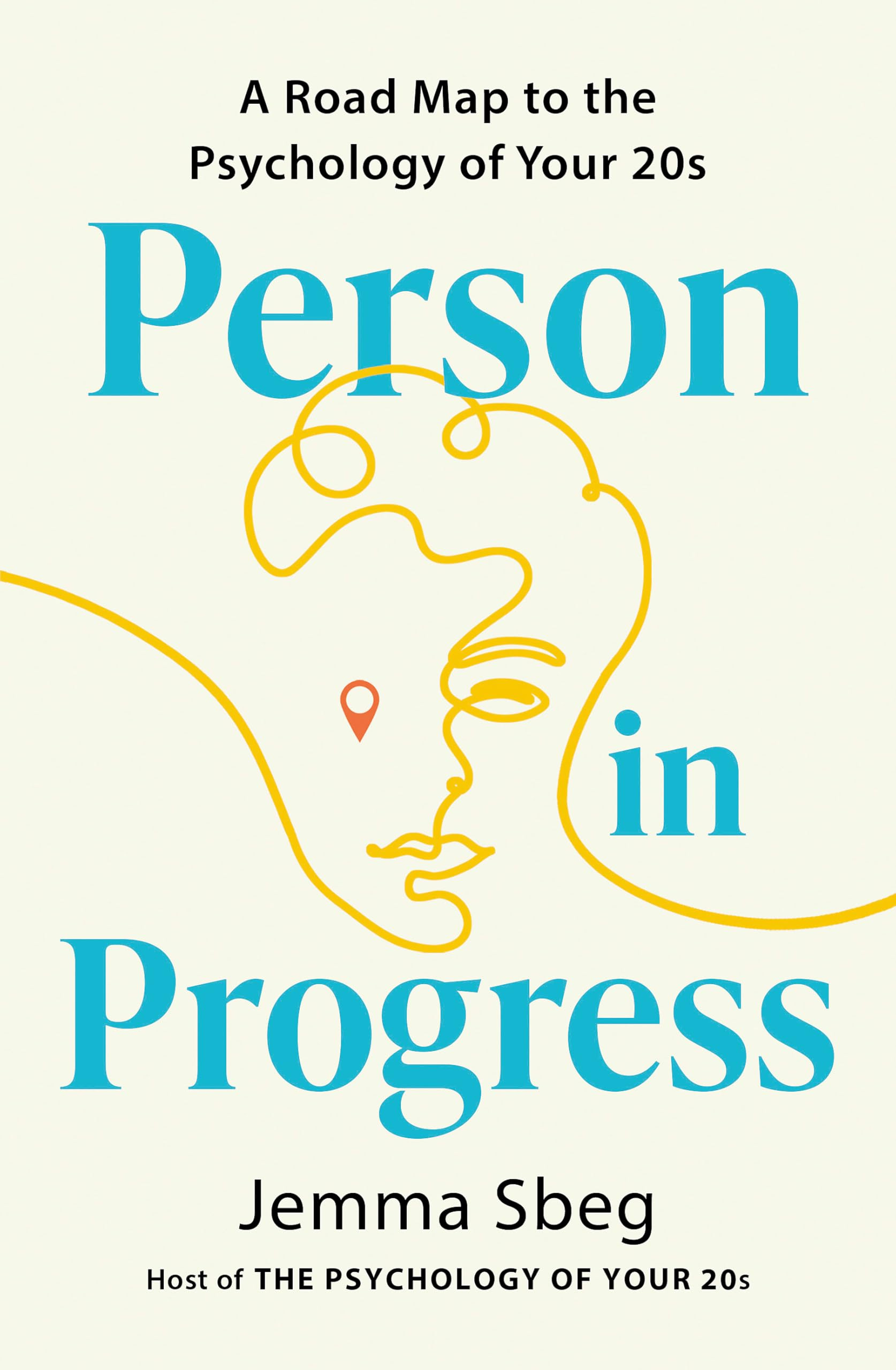
“Person in Progress” by Jemma Sbeg is a roadmap to navigating the personal and professional transitions of your twenties, combining psychological research with personal stories.
Words of Wisdom
"We cannot change the cards we are dealt, just how we play the hand." - Randy Pausch